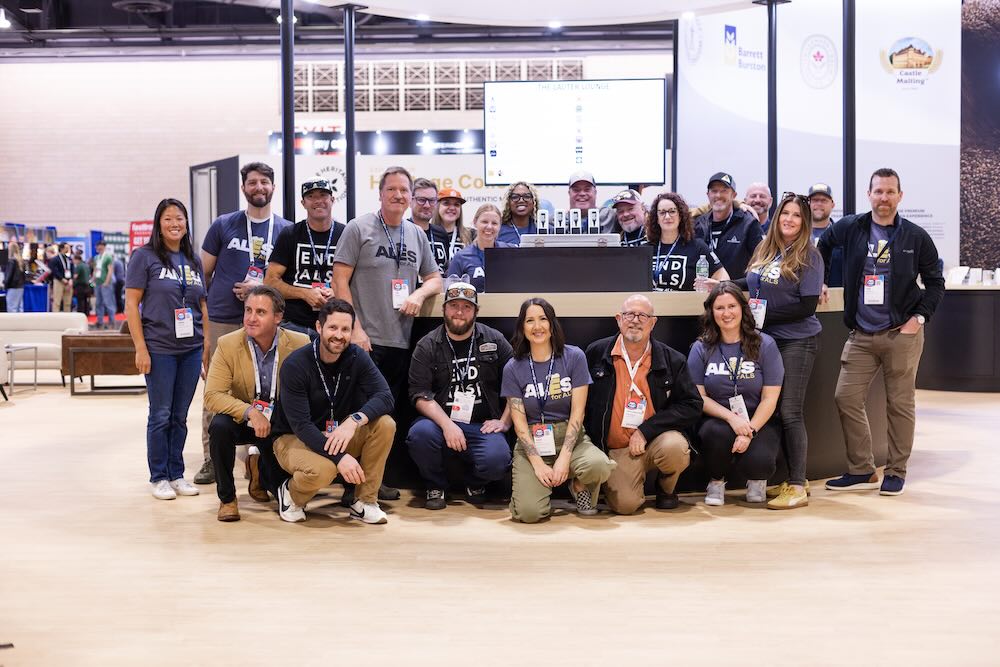
Hops are the foundation of Ales for ALS™. Each year, the program provides brewers all over the country and the world with a free, specially selected hop blend from Yakima Chief Hops and Loftus Ranches. Each brewer then crafts a beer, adding the hops to their own unique recipe and donating one dollar per pint sold to support the ALS Therapy Development Institute’s (ALS TDI) research to end ALS.
While hops may be the most well-known element in beer making, there is another ingredient that’s just as important in creating the flavor of a brew — malt. In addition to the free hops they already receive, a new program from Soufflet Malt is helping to bring the cost of production for Ales for ALS™ brewers down even more. Participating brewers can now order their malts from the company’s brands, including the Country Malt Group in the US and Great Western Malting or Canada Malting in Canada, for a reduced price.
“If hops are the heart of a beer, malt is really the backbone,” says Cait Schut, Senior Marketing and Communications Manager at Soufflet Malt. “You need that malt foundation to set the tone of where your beer is going. Is it going to be a lighter beer? Is it going to be a heavier beer? Is it going to have a crisp straw color? Or is it going to have more of an orangey golden hue? Those are the things that are determined by your malt.”
Making an Ales for ALS™ Connection
Cait Schut was instrumental in opening the door for this collaboration. Before starting her role at Soufflet Malt, Cait worked for Yakima Chief, where she became intimately familiar with Ales for ALS™ and its mission to support research at ALS TDI. However, her passion for the fight against ALS goes back much further — beginning with her friend, Jay Glaueitz.
 Jay had been Cait’s mother’s coworker for more than 30 years when he was diagnosed with ALS. His wife, Anne, soon found she needed help as she tried to keep working while serving as his caregiver. Cait, who was attending college and working various odd jobs at the time, agreed to come over to help keep the house clean and assist where she could.
Cait says that she and Jay quickly developed a deep bond that made it all the more difficult to watch as his disease progressed.
“Jay just had such a great personality,” she says. “I know they say this about a lot of people, but he was just the last person that you could ever imagine being housebound and quadriplegic. He was a motorcycle rider. He was a traveler. He went to every concert that came into town. He was just such an active human being.”
An Inspiration for ALS Advocacy
Despite the fast progression of his disease, Jay became deeply involved in ALS advocacy. Just six weeks before he passed away, he lobbied California state legislators in Sacramento, helping to pass a bill that expanded access to assistive communication devices for people with ALS.
“Anne said that she believes that the speech coming up is what made him hold on as long as he did,” says Cait. “That selfless drive to help the ALS community, even though he knew he wouldn't be around to see his impact, is something that's inspired me to continue helping the community impacted by ALS.”
Uniting the Brewing Community Against ALS
Cait’s own advocacy journey began with attending ALS walks in California and organizing events such as a local art show to raise awareness and funds for organizations including ALS TDI. At the same time, she was also building a career in the brewing industry. Eventually, she found her way from California to Washington, where she began working for Hop Union, which would later become Yakima Chief Hops. There, she found a way to bring together her passion for the brewing industry and her drive to help people with ALS through the Ales for ALS™ program.
As Cait worked her way up to become Yakima Chief’s Global Communications Manager, she helped promote the company’s efforts to contribute to the fight against ALS. After seven years, she ultimately moved on, taking a job with the Country Malt Group, which Soufflé Malt later acquired. Soon, she realized she was in an excellent position to help Ales for ALS™ brewers continue to make the beers that support the program.
“I was excited to bring over what we were doing with hops to the malt world,” she says. “This way, we can reduce the cost of the malt as well. It’s great to be able to continue along with this idea of brewing for a cause through my connection with the brewing community. It’s something that I’ve always been passionate about.”
To learn more about Ales for ALS™, including how to become a participating brewer, click here.
What to Do Next: