Key Takeaways:
- Stem cells are the basic building blocks that allow the body to grow and heal.
- Through a process called “differentiation,” they can become different kinds of cells that carry out a variety of functions.
- Embryonic stem cells are pluripotent, meaning they can become any other type of cell. Adult Stem cells are no longer pluripotent
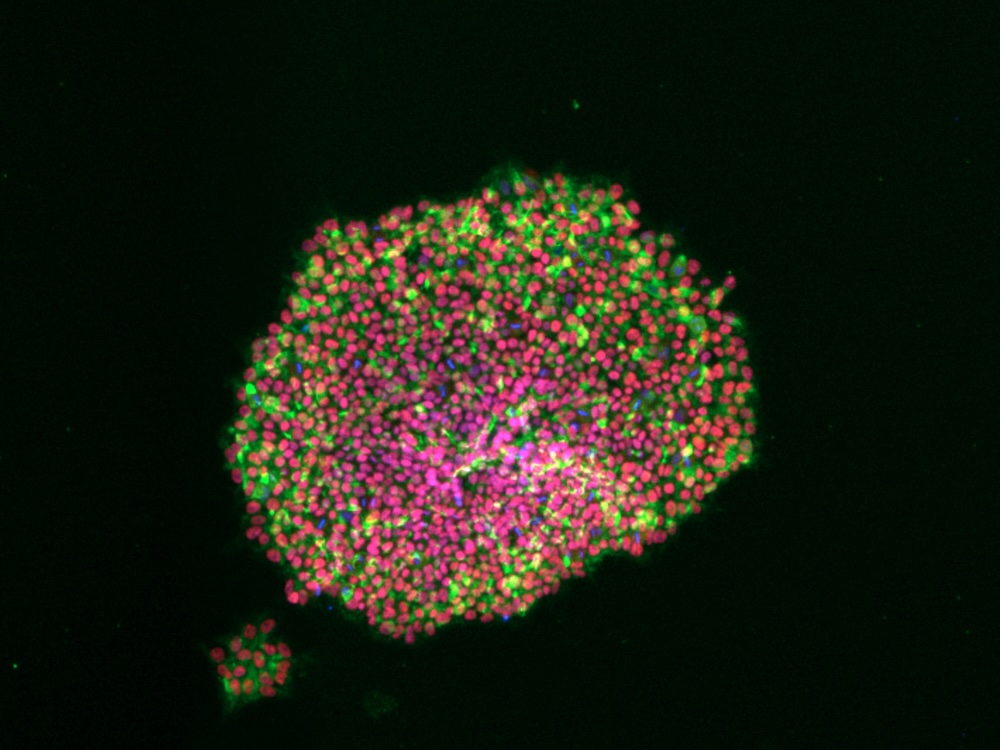
- Induced pluripotent stem cells (iPSCs), developed in the mid-2000s, allow scientists to revert adult tissue cells to an embryonic-like state and then differentiate them into other cell types, including motor neurons.
- There are several stem cell-based treatments for ALS in various stages of development. Currently, no FDA-approved stem cell treatments are available for the disease.
- ALS TDI uses iPSCs made from cells donated by ARC Study participants to create cellular models of ALS for use in research and drug discovery.
- Most existing ALS models are based on familial ALS mutations, which represent only 10–15% of people with the disease. iPSCs have now made it possible to create the first models of sporadic ALS.
- The PRISM ALS initiative, a collaboration between ALS TDI, LifeArc, and Axol Bioscience, aims to develop iPSC models of sporadic ALS and make them widely available to the research community.
What is a Stem Cell?
Stem cells are the basic building blocks that allow our bodies to develop when we’re younger and heal throughout our lives. Through a process called “differentiation,” they can become different kinds of cells that carry out a variety of functions. In its earliest stages, a human embryo is made up of embryonic stem cells, which can differentiate into any of the hundreds of types of cells that make up our bones, muscles, nerves, blood, and more. This ability to transform into any kind of cell is known as “pluripotency."
Later in life, adults still have some stem cells naturally in their body, but they are no longer pluripotent. An adult stem cell from the liver can only become a liver cell, a stem cell from the skin can only become a skin cell, etc. This allows our body to continue making new cells to support processes like healing wounds and producing blood. However, many kinds of cells, including the motor neurons in the brain and spinal cord, cannot be naturally generated from stem cells once a person is fully grown to our knowledge.
What are Induced Pluripotent Stem Cells?
The ability of pluripotent stem cells to reproduce any kind of cell in the body has long intrigued researchers in biomedical science. However, for decades this was a controversial area of study due to the ethical implications of harvesting cells from human embryos. This changed in the mid-2000s with the development of induced pluripotent stem cells (IPSCs) — a breakthrough that earned the scientists who discovered the process for creating them the Nobel Prize in 2012.
With the techniques they discovered, scientists can now revert tissue cells from an adult back to a state similar to an embryonic stem cell. Then, by using a specific combination of environmental conditions and chemicals, they can be differentiated into any kind of cell.
Unlike most adult cells—other than those found in cancerous tumors—iPSCs can also be reproduced almost indefinitely, creating what is known as an “immortalized cell line.” Before iPSCs, most experiments in human cells were conducted in cells harvested from tumors or genetically edited to behave more like a cancer cell.
Stem Cells Today in Medicine
In medicine, stem cells are the focus of a growing body of research as both tools for studying diseases and for their potential to be used as treatments. Currently, there are only a handful of stem cell treatments approved for use in the US—mainly for treating blood cancers such as leukemia. Many of these therapies use healthy stem cells taken from elsewhere in the patient’s body, donated by another person, or harvested from umbilical cord blood, to replace cells damaged by chemotherapy.
According to the Institute for Stem Cell and Regenerative Medicine at the University of Washington, experimental stem cell treatments may have the potential to treat conditions such as heart disease, diabetes, vision disorders, and neurodegenerative diseases. Several autologous stem cell therapies—in which adult stem cells are removed from the body, processed, and then reintroduced—have been investigated in ALS, in both preclinical studies and some human trials. While this remains an active area of research, there are currently no FDA-approved stem cell therapies available for the disease.
Stem Cells as a Tool for ALS Research
While stem cell therapies in ALS currently remain experimental, iPSC models of ALS have recently become an important tool for learning about the disease and testing potential treatments. Before iPSCs, it was impossible to study ALS in a living human motor neuron—the type of cell affected by the disease. With this technology, researchers can now take easily harvested cells from a living donor, turn them into stem cells, and then differentiate them into cells very similar to a motor neuron.
At the ALS Therapy Development Institute (ALS TDI), we have created several cellular models of ALS using this technique. To accomplish this, we begin with skin cells donated by people with ALS who participate in our ALS Research Collaborative (ARC) Study. Our Cell Biology team can then differentiate those cells into motor neurons, astrocytes (cells that support motor neurons), myocytes (muscle cells), or any number of other cell types for drug testing and other experiments.
ALS TDI scientists use iPSCs to conduct a variety of experiments:
- By looking at different kinds of cells derived from people with ALS versus healthy controls, we can try to identify what is happening to the cell to cause ALS symptoms.
- A cell can take several months to grow from an iPSC into a mature neuron. By studying the cell at multiple times during this process, we can learn more about how some ALS mutations might affect cells even as they develop.
- In cells from people with inherited genetic mutations related to familial ALS, our scientists can correct certain mutations, creating a model known as an “isogenic line.” This allows the direct comparison of cell lines that are genetically identical, except for the one specific mutation of interest, which can confirm that findings seen in the cells are caused by that mutation.
Stem Cells as a Potential Model of Sporadic ALS
One of the most exciting frontiers of stem cell research is the creation of models representing sporadic ALS. Previously, nearly all cellular and animal models of ALS were created by introducing mutations in genes associated with familial ALS. This has meant that, for decades, nearly all ALS treatments have been tested in models based on mutations that only represent about 10-15% of the population of people with the disease. Many believe that this mismatch is a contributing factor to the high failure rate of ALS treatments in clinical trials, among other challenges.
However, iPSCs have opened the door for researchers to create immortalized cell lines from cells donated by people with sporadic ALS. These cell lines may represent the first models of sporadic ALS, presenting researchers with opportunities including:
- Learning more about the biology and potential causes behind sporadic ALS
- Identifying new therapeutic targets for more diverse forms of the disease
- Evaluating treatments in models directly relevant to a much larger percentage of the population with the disease than ever before—potentially increasing the likelihood that discoveries translate into meaningful treatments
To help researchers take advantage of the potential of these new models, ALS TDI recently announced an initiative with LifeArc and Axol Bioscience known as PRISM ALS. This program aims to develop iPSC-derived motor neuron models of sporadic ALS that can be made widely available to the research community. These models will be based on the iPSC cell lines created at ALS TDI in collaboration with participants in the ARC Study.
By continuing to refine these models and producing them at commercial scales, PRISM ALS has the potential to accelerate progress across the ALS field by providing robust, human-relevant tools that better reflect the biological diversity and complexity of the disease. To learn more about PRISM ALS and the potential of iPSC models of sporadic ALS, click here.
What to Do Next:
Frequently Asked Questions
What is a stem cell?
Stem cells are the basic building blocks that allow our bodies to grow when we're younger and heal throughout our lives. Through a process called “differentiation,” they can become different kinds of cells that carry out a variety of functions.
What does "pluripotency" mean?
Pluripotency is the ability of embryonic stem cells to transform into any of the hundreds of types of cells that make up our bones, muscles, nerves, blood, and more. As adults, there are still stem cells present in our bodies, but they are no longer pluripotent and can only differentiate into a limited number of cell types.
What is an induced pluripotent stem cell (iPSC)?
An iPSC is created when scientists revert a tissue cell from an adult back to a state similar to an embryonic stem cell. Using a specific combination of environmental conditions and chemicals, that cell can then be differentiated into any kind of cell.
How does ALS TDI use stem cells in its research?
ALS TDI creates cellular models of ALS using iPSCs derived from skin cells donated by people with ALS who participate in the ARC Study. Our Cell Biology team differentiates those cells into motor neurons, astrocytes, myocytes, or other cell types for drug testing and experiments.
What is sporadic ALS, and why do sporadic models matter?
Sporadic ALS refers to the 85% of ALS cases not linked to the inherited mutations associated with familial ALS. Historically, nearly all ALS models were based on familial mutations, a mismatch believed to contribute to the high failure rate of ALS treatments in clinical trials. iPSCs now allow researchers to create the first true models of sporadic ALS.
What is PRISM ALS?
PRISM ALS is an initiative announced by ALS TDI in collaboration with LifeArc and Axol Bioscience to develop iPSC models of sporadic ALS, based on cell lines created at ALS TDI through the ARC Study, and make them widely available to the research community.