What Is the ALSFRS-r?
For years, the revised ALS Functional Rating Scale (ALSFRS-r) has been the standard for tracking the disease progression of people living with amyotrophic lateral sclerosis (ALS), commonly known as Lou Gehrig’s disease.
The ALSFRS-r is a survey designed to be filled out by people with ALS, physicians and nurses caring for people with ALS, or ALS caretakers, at regular intervals. It asks the respondent about the person’s ability to complete 12 different tasks such as speaking, swallowing, handwriting, and walking. The ratings are done on a scale from zero to four; zero meaning they are incapable of accomplishing the task, and four meaning they can do it with no difficulty. These ratings are then totaled to make one overall score, from zero to 48.
Limitations of the ALSFRS-r
The ALSFRS-r can be an effective tool, but it is limited by the fact that it is a subjective measure of a person’s abilities – it relies on the observer’s assessment of how the disease is affecting a person’s ability to complete the tasks being evaluated by the survey.
While the test has been designed to provide as accurate a measure of disease progression as possible – and to make these measurements as consistent as possible from subject to subject – there is no guarantee that any two respondents will rate the relative progression with the same score. This is one reason why researchers are so motivated to discover more reliable biomarkers for ALS.
Why Researchers Need More Reliable ALS Biomarkers
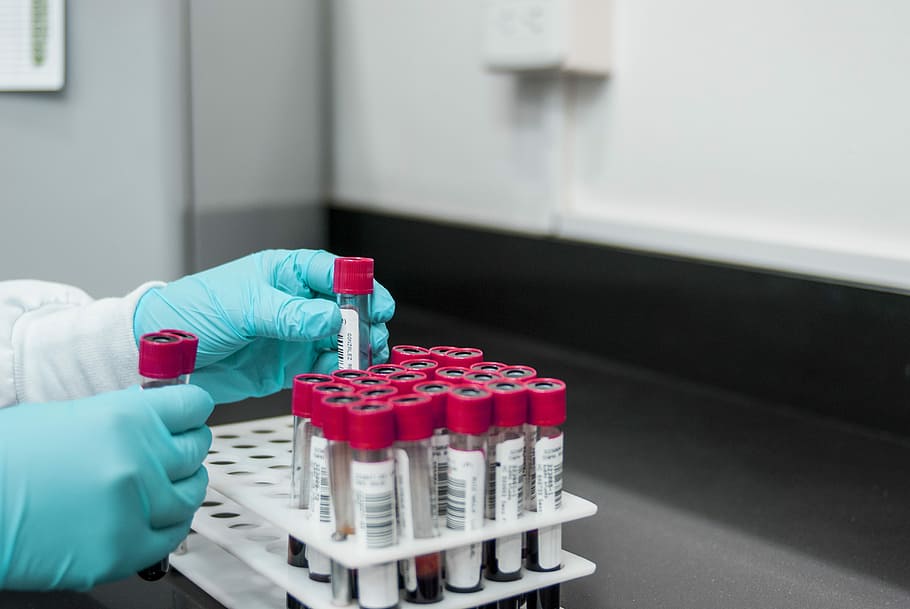
A biomarker is a biological measure that provides information about a disease. Common examples include insulin levels for diabetes or LDL cholesterol for heart disease. For ALS, a blood-based biomarker could play a similar role, allowing disease progression to be monitored through a simple blood test.
Reliable biomarkers could be a major step forward for both patient care and drug development. In addition to helping people with ALS better understand how the disease is progressing, biomarkers could give researchers more objective tools to evaluate potential treatments in clinical trials. Today, many ALS clinical trials rely heavily on the ALS Functional Rating Scale-Revised (ALSFRS-R), which measures changes in a person's functional abilities over time. A reliable biomarker—or combination of biomarkers—could complement these assessments by providing clear biological evidence of whether a treatment is affecting the disease, helping researchers make faster and more informed decisions about which therapies should advance.
What ALS Biomarkers Currently Exist?
There are many biomarkers for ALS that are currently used in the diagnosis and treatment of the disease, as well as the earlier stages of drug development. These include:
- Respiratory function
- MRI imaging of parts of the nervous system
- The presence of proteins associated with certain genetic mutations
- Body weight
However, to be used as an endpoint for a clinical trial in the US, biomarkers must go through a stringent validation process. While there are a handful of approved biomarkers available to researchers, and some other promising potential candidates, more are needed to provide robust alternatives to the subjective measures of the ALSFRS-r survey.
Until reliable biomarkers are discovered and approved, the ALSFRS-r remains a helpful tool to track disease progression, despite its inherent limitations.
How ALS TDI Is Working to Identify Potential Biomarkers
At the ALS Therapy Development Institute (ALS TDI), we are working through our ALS Research Collaborative (ARC) program to partner with people with ALS all over the world to collect data and to search for potential biomarkers.
In-Home Blood Collection Program
These efforts include our first-in-kind In-Home Blood Collection program, which allows ARC participants to contribute regular blood samples by mail without leaving their homes. By studying these samples over time, we aim to identify more potential blood-based biomarkers that could correlate with disease progression. In 2022, ALS TDI received a grant from the Department of Defense (DOD) to fund an expansion of this program, along with more advanced sample testing with the potential to reveal new protein biomarkers of ALS.
LifeArc Collaboration
ALS TDI is currently collaborating with LifeArc, one of the United Kingdom's leading charitable biomedical research organizations. Together, ARC researchers are working with LifeArc to identify and validate blood-based biomarkers for ALS. Using blood sample data from the ARC study, this program aims to enhance early diagnosis and monitor therapeutic responses to treatments in clinical trials. We have recently identified preliminary markers that could predict the rate of disease progression, paving the way for earlier diagnosis and improved treatment monitoring.
Digital Biomarkers
In addition to using biological samples, ARC researchers are working to use data to create digital biomarkers for tracking ALS progression. Some participants in the program are provided with digital accelerometers to be worn on the arms and legs to generate movement data and asked to periodically record voice messages to keep track of vocal function. ALS TDI and several collaborators have utilized these data to develop five prototype digital biomarkers
ALS TDI is currently working with the Critical Path Institute (C-Path) to evaluate ARC Study voice and accelerometer data as potential clinical trial outcome measures – advancing tools that could make ALS trials more sensitive, patient-centered, and better able to detect meaningful change.
How you can Participate in Research with ALS TDI
Anyone diagnosed with ALS and asymptomatic carriers of ALS-related genetic mutations can participate in the ARC study and help contribute to this criticial research.
To learn more about the ALS Research Collaborative, click here.
What to Do Next
Frequently Asked Questions
What is the ALSFRS-r?
The revised ALS Functional Rating Scale (ALSFRS-r) is a survey designed to be filled out by people with ALS, physicians and nurses caring for people with ALS, or ALS caretakers, at regular intervals. It asks the respondent about the person’s ability to complete 12 different tasks such as speaking, swallowing, handwriting, and walking, rated on a scale from zero to four, with a total score from zero to 48.
What are the limitations of the ALSFRS-r?
The ALSFRS-r is limited by the fact that it is a subjective measure of a person’s abilities. There is no guarantee that any two respondents will rate the relative progression with the same score.
What is a biomarker in the context of ALS?
A biomarker is any biological measure that tells us something about a disease, like insulin levels for diabetes or LDL cholesterol for heart disease. For ALS, a blood-based biomarker could be particularly useful – something that could be detected through a simple blood test.
Why do ALS clinical trials rely on the ALSFRS-r?
Many trials for ALS rely heavily on the ALSFRS-r to see if treatments appear to be having any effect – often using a slowing down or stopping in the decline of a subject’s scores as an important endpoint.
What biomarkers are currently used in ALS research?
Biomarkers currently used in ALS diagnosis, treatment, and drug development include respiratory function, MRI imaging of parts of the nervous system, the presence of proteins associated with certain genetic mutations, and body weight.
What is the ALS Therapy Development Institute (ALS TDI)
The ALS Therapy Development Institute (ALS TDI) is the world’s most comprehensive drug discovery institute focused solely on ALS. ALS TDI is one of the few organizations with the integrated infrastructure and expertise needed to rigorously discover, test, and advance potential ALS treatments.
What is ALS TDI doing to find better ALS biomarkers?
ALS TDI is working through our ALS Research Collaborative (ARC) program to partner with people with ALS all over the world to collect data and to search for potential biomarkers. These efforts include an In-Home Blood Collection program and the development of digital biomarkers using voice recordings and accelerometer data.
Who can participate in ALS TDI’s research?
Anyone diagnosed with ALS and asymptomatic carriers of ALS-related genetic mutations can participate in the ARC study and help contribute to this important research.